Increasing risk| 3,111,765 properties at risk in 30 yearsi
Flood risk is increasing for Florida
As sea levels rise and and weather patterns change, flood risks will increase. Approximately 2,634,129 properties are already at risk in Florida, and within 30 years, about 3,111,765 will be at risk.
Change in the number of properties at risk i
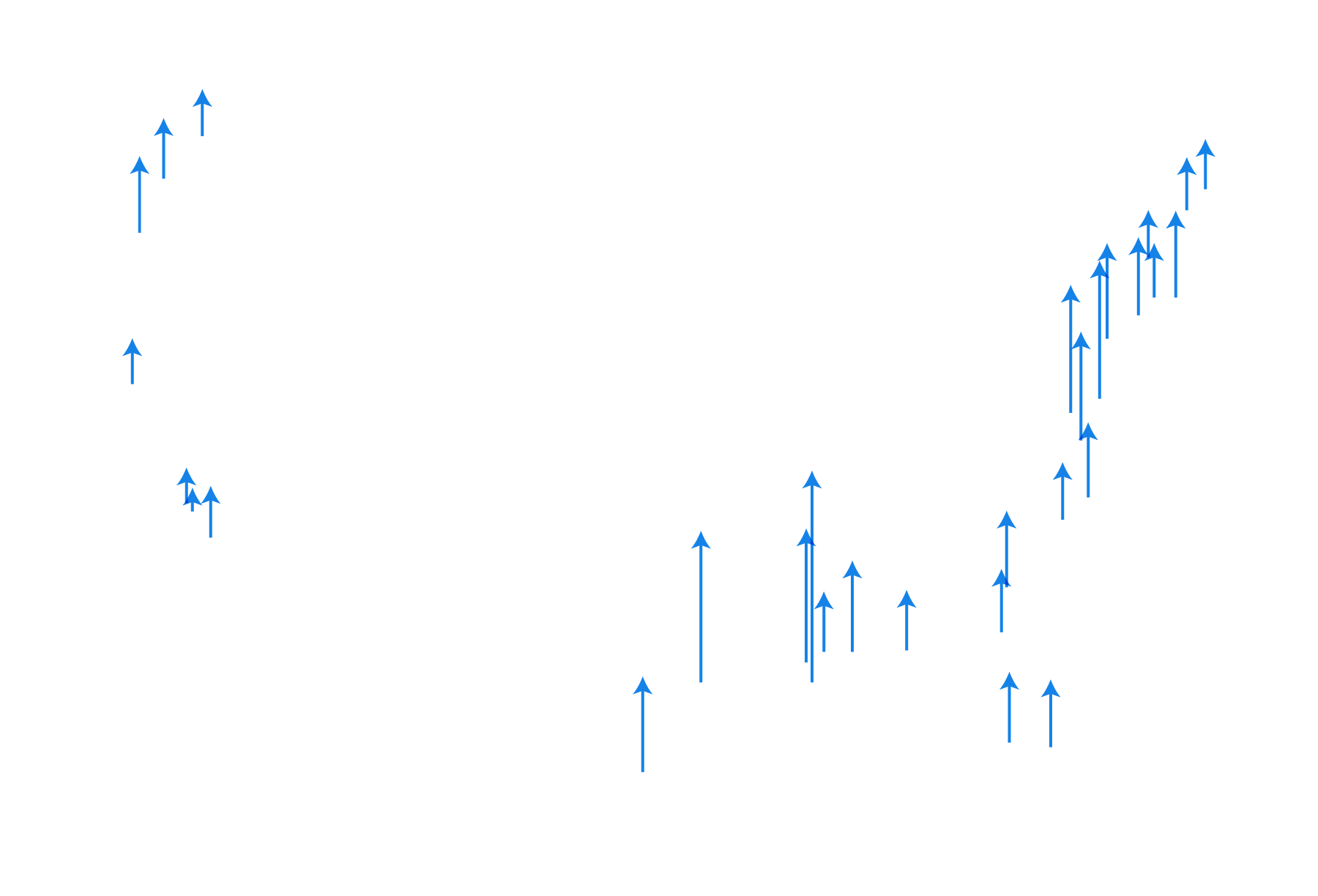
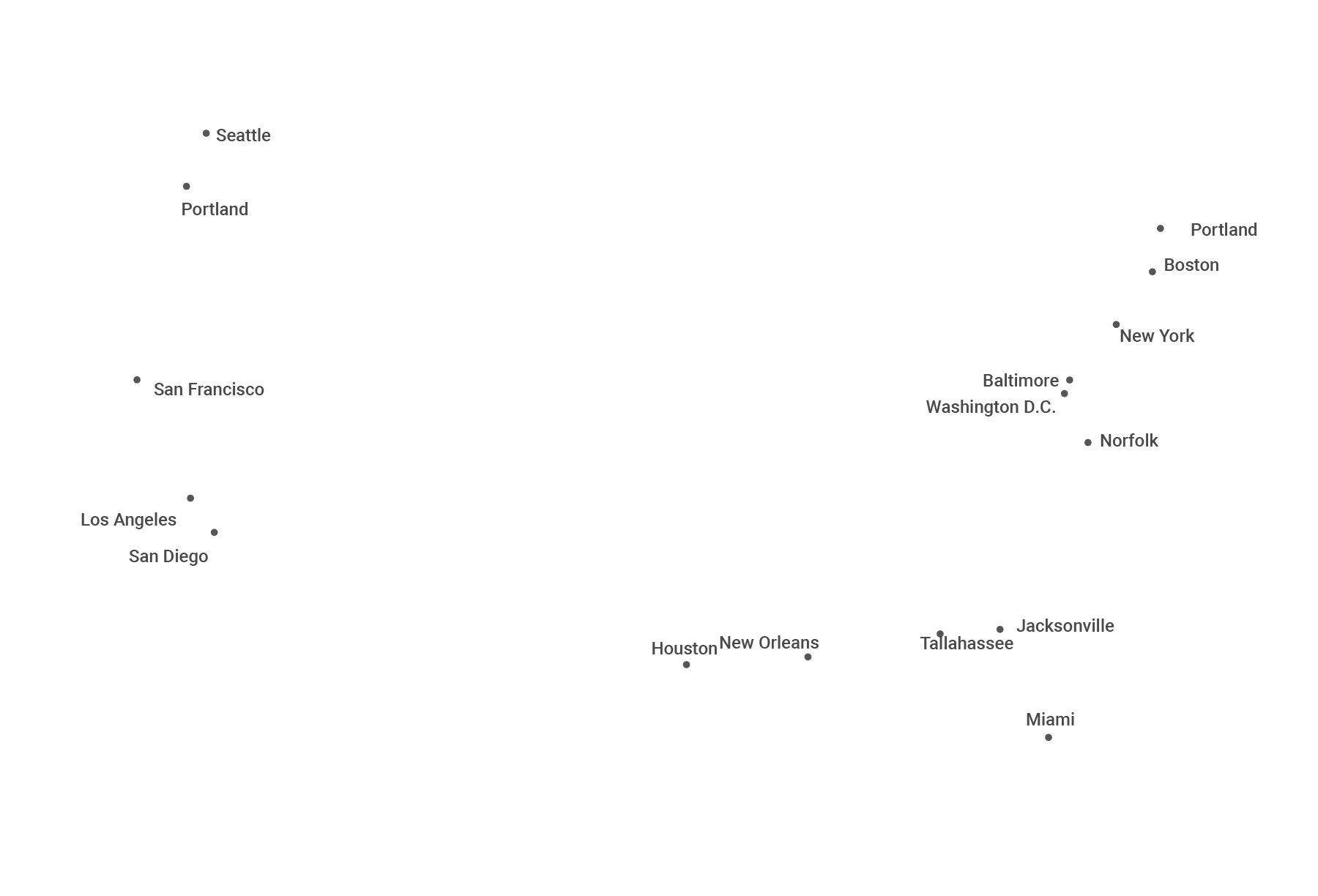
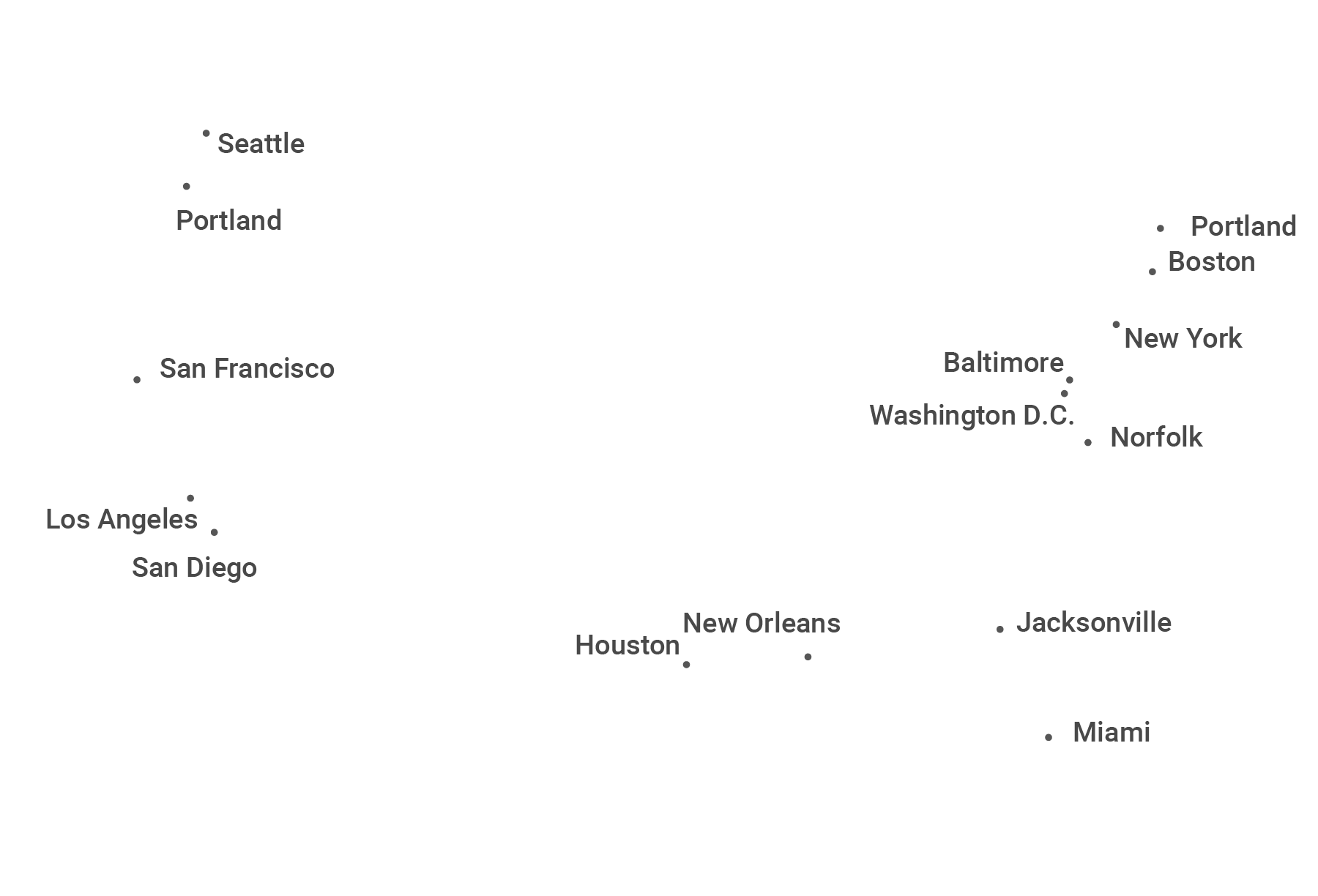
Places with highest 30-year risk growth (properties at risk)
Flood risks are increasing because of the environment.
A changing environment means higher seas, new weather patterns, and stronger storms. As the atmosphere warms, there is more evaporation and more water available when it rains.
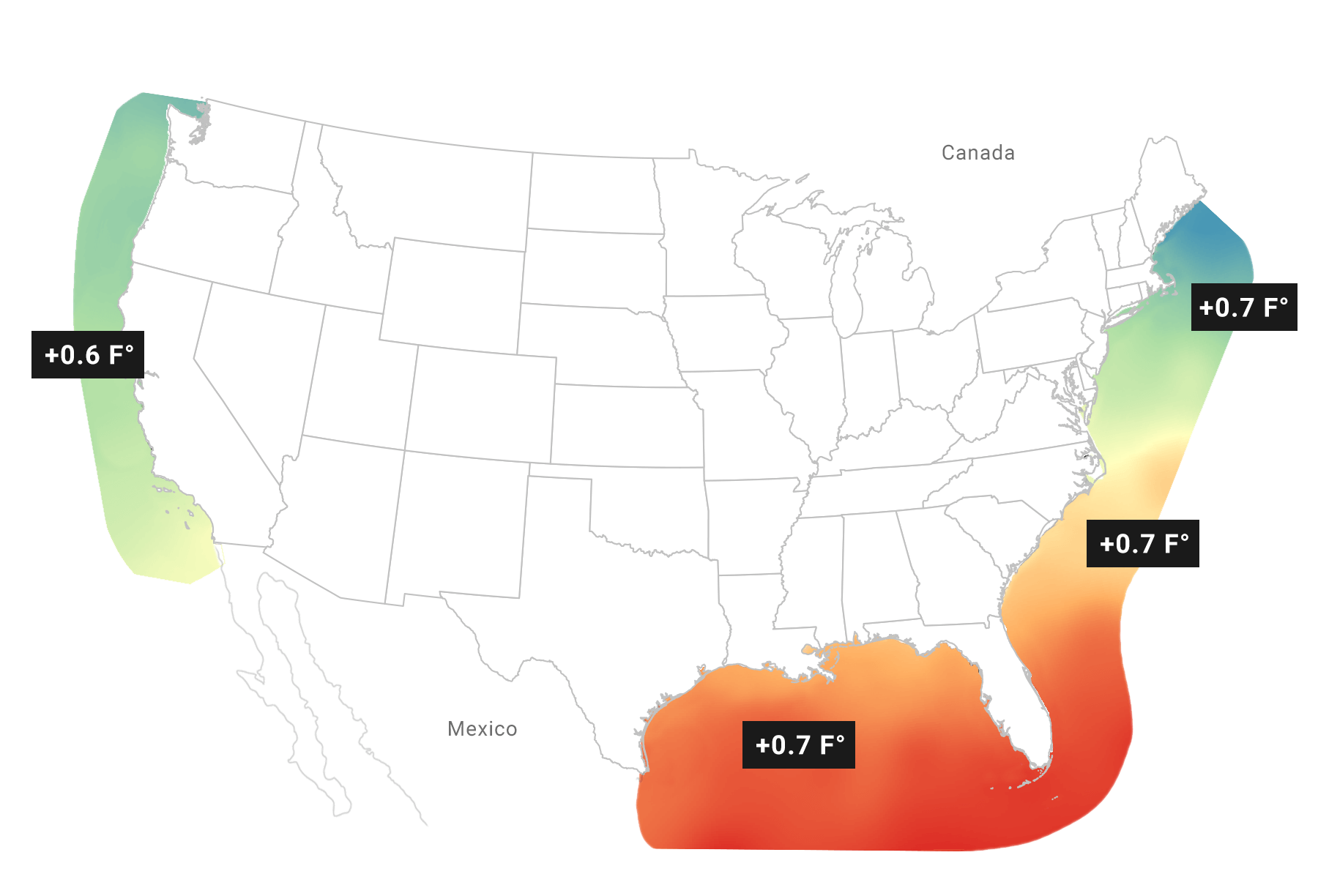
A warmer atmosphere also means warmer oceans, which can intensify flooding from hurricanes and offshore storms. Sea level rise also increases coastal flood risks, as higher seas mean there's more water available when high tides and coastal storms cause flooding.
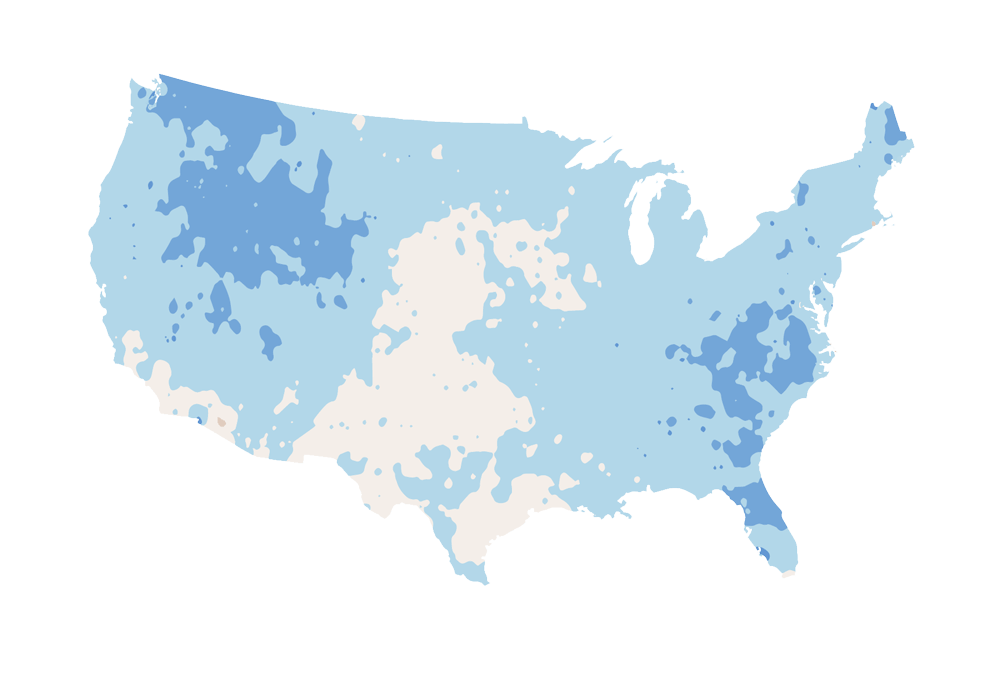
Change in extreme rain events compared to 1980-2010 average. i
Change in extreme rain events compared to 1980-2010 average. i
LighterHeavier
-10%
-5%
0
+5%
+10%
Source: NASA Earth Exchange Global Daily Downscaled Projections (NEX-GDDP).
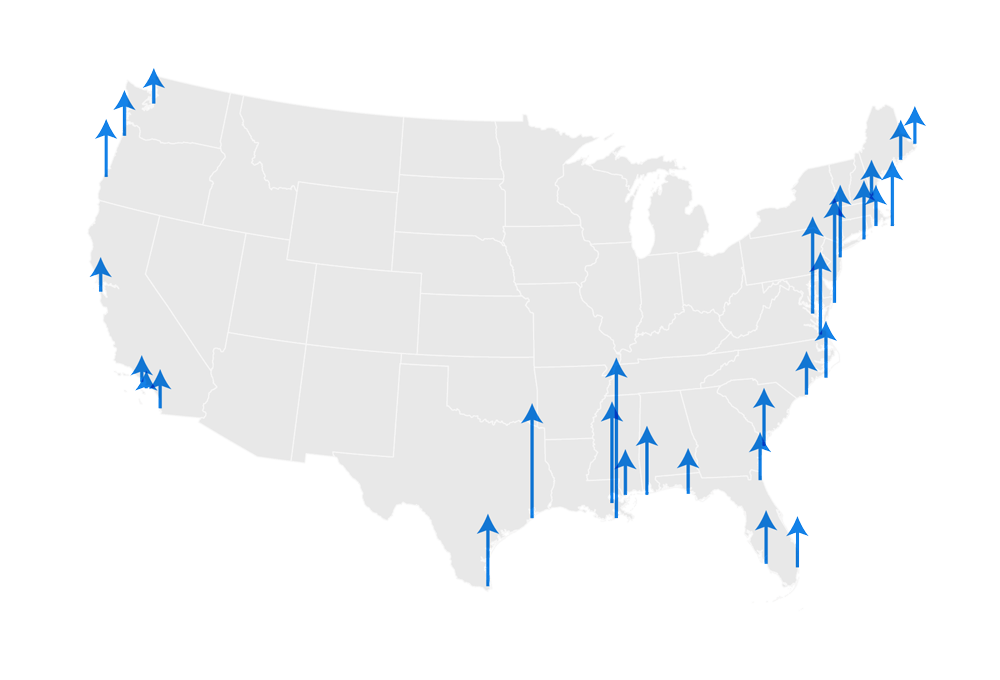
Rise in inches, compared to 1980-2010 average. i
Rise in inches, compared to 1980-2010 average. i
+5 in.
Place with highest sea level rise (inches)
14.4
Grand Isle, LA
10.3
Galveston Pier 21, TX
9.4
Ocean City Inlet, MD
9.1
New Canal Station, LA
8.7
Lewisetta, VA
Source: Kopp et al, 2017. Evolving Understanding of Antarctic Ice‐Sheet Physics and Ambiguity in Probabilistic Sea‐Level Projections.
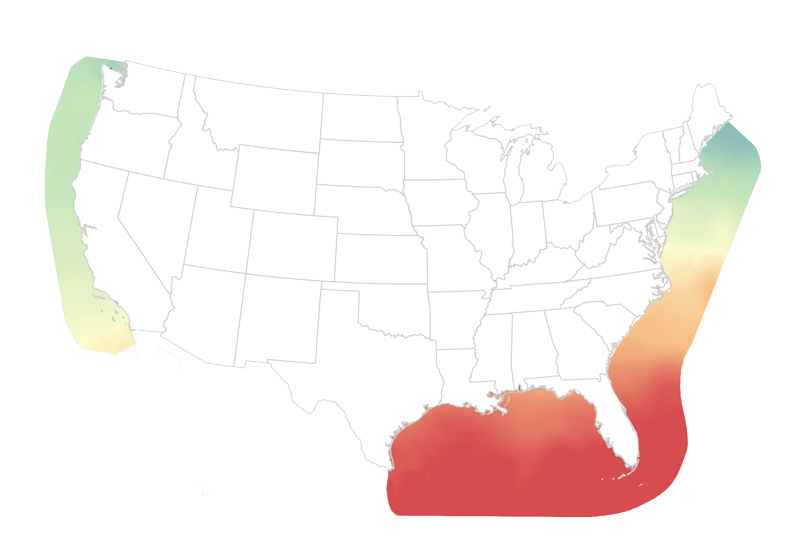
Temperatures in degrees Fahrenheit. Increase in comparison to the 1980-2010 average. i
Temperatures in degrees Fahrenheit. Increase in comparison to the 1980-2010 average. i
40°60°80°F
Source: NOAA National Data Buoy Center and Schmidt et al, 2014., Configuration and assessment of the GISS ModelE2 contributions to the CMIP5 archive.
Score Map
Flood Factors across Florida.
A property's Flood Factor is an indicator of its comprehensive flood risk, ranging from 1 (minimal) to 10 (extreme). Properties with higher Flood Factors are more likely to flood.
Deeper floods from major events, like hurricanes, are less likely to occur, but cause greater damage than more shallow flood events, like heavy rains.
More likely to occur
More properties impacted
0
1
2
3
Depth of flooding (feet)
0
1
2
3
Depth of flooding (feet)
Note: 413,338 properties in this area are protected by adaptation. While the above projections take into account this protection, risks may substantially increase in the event of adaptation failure.
National Flood Risks
Flooding is a national issue.
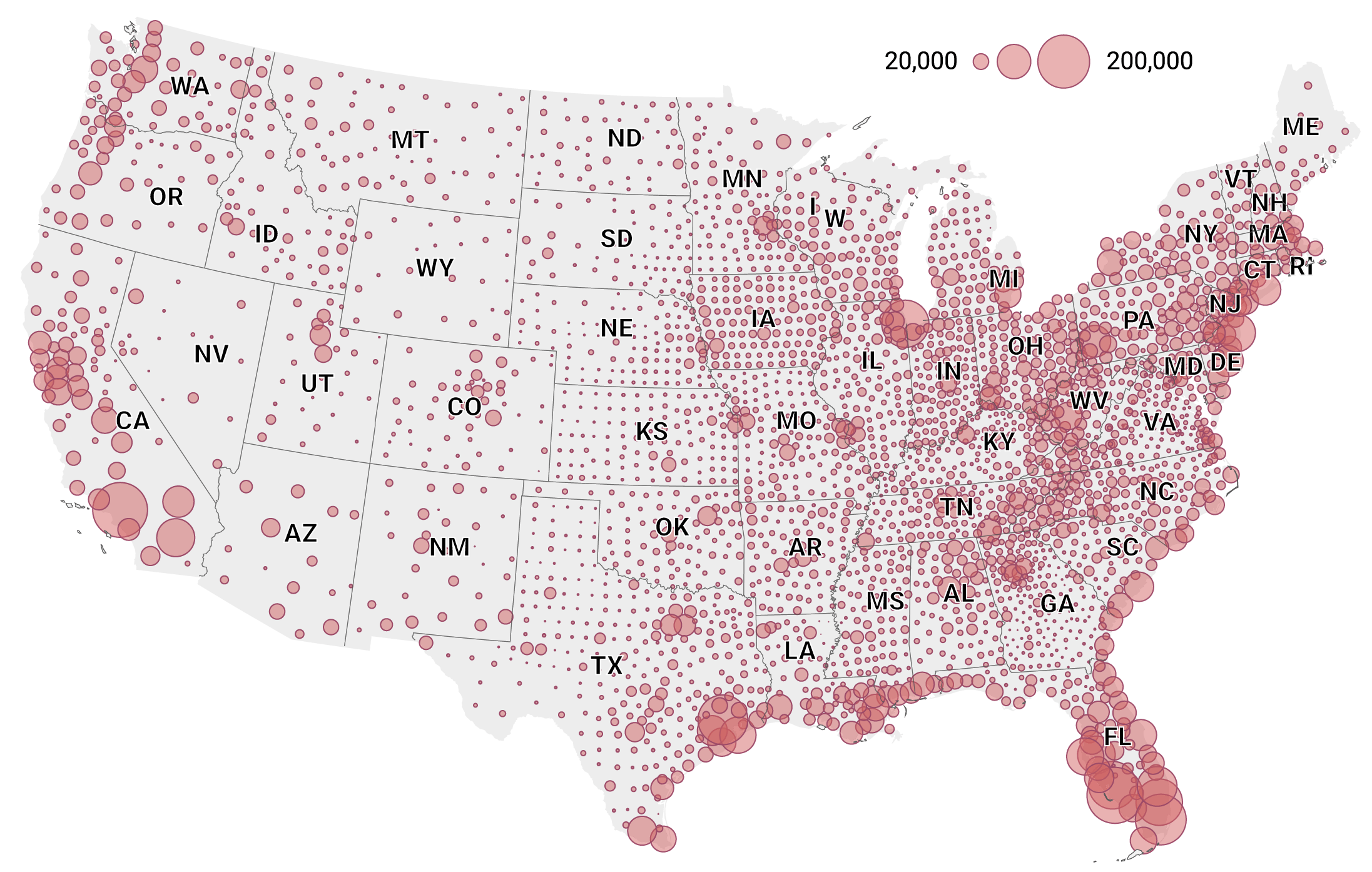
Across the United States, more than 14.6 million properties are already at substantial risk of flooding this year, and approximately 1.83M of those properties are in Florida.
Total properties with substantial risk i
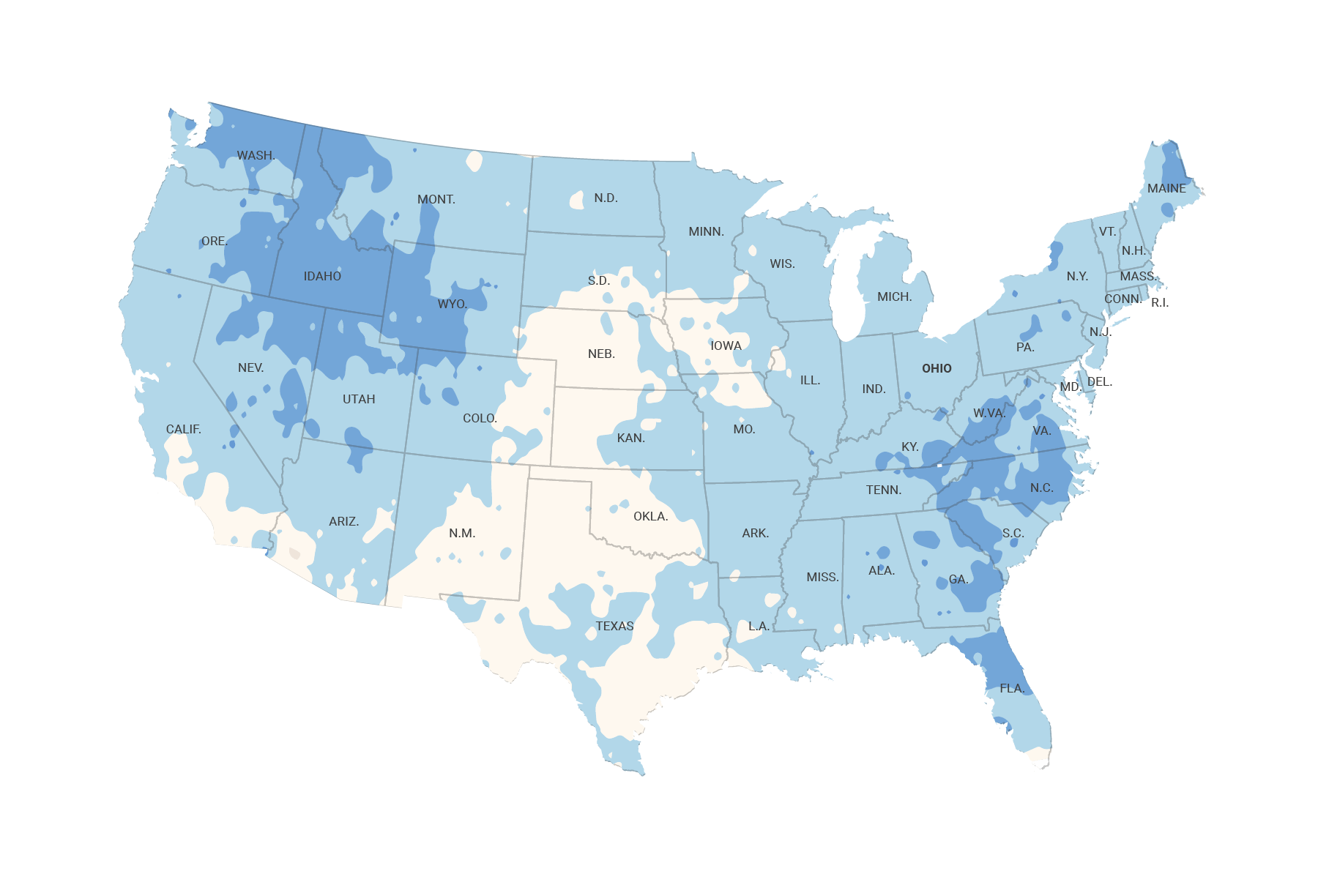
How flood risk will change in 30 years
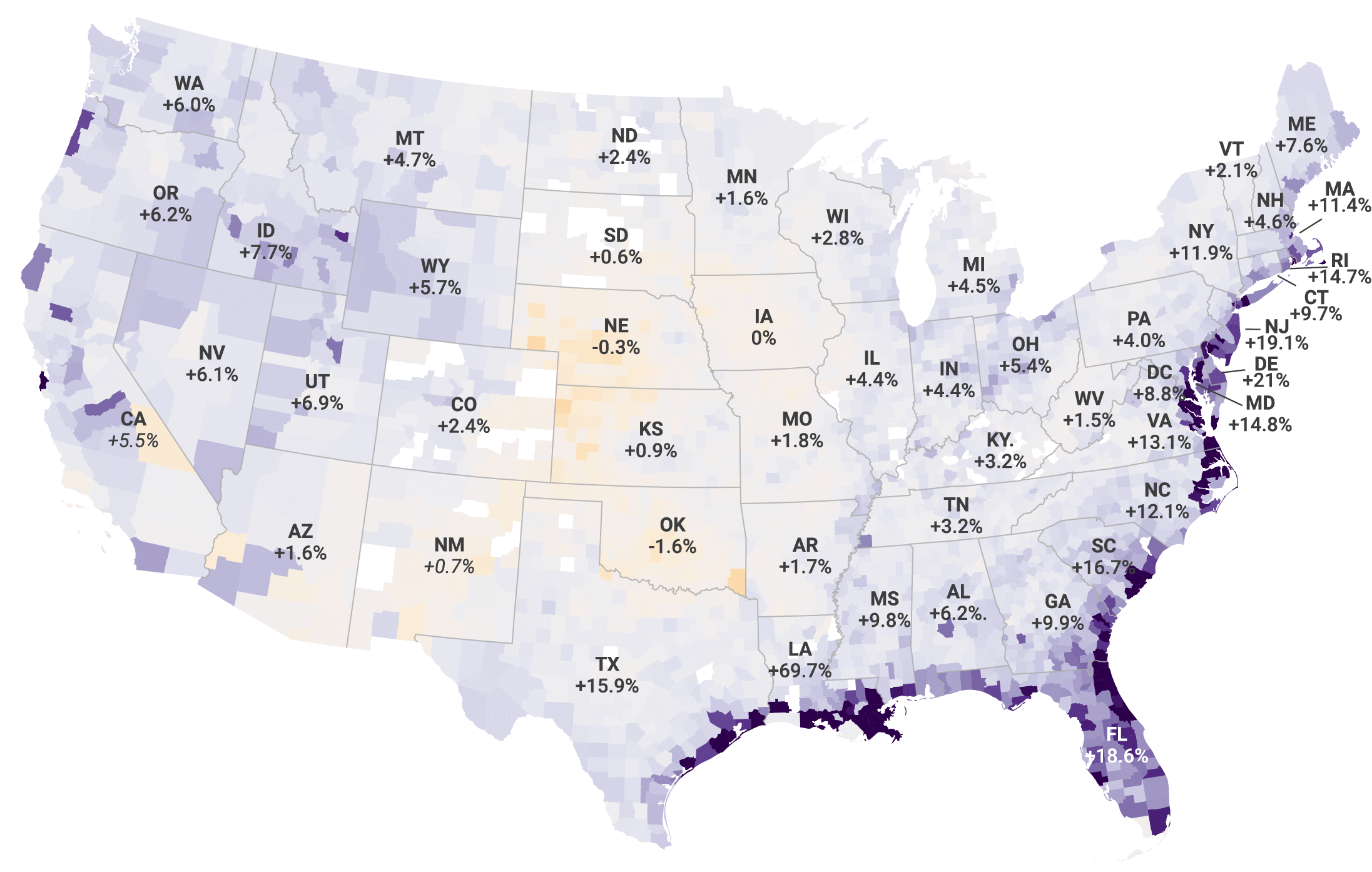
Because of changes in the environment, more than 16.2 million properties will have substantial risk in 30 years. Florida will see a 18.6% increase in the number of properties with substantial risk in the next 30 years.
30-year change in number of properties at substantial risk i
-30%0+30%+260%
No data
Community Solutions
There are solutions to protect Florida.
Communities that adapt to higher risks can limit damage and lower flood insurance costs. Florida is already investing in flood risk reduction projects, but more may be needed. Learn more about solutions.
348
Known adaptation measures i
413,338
Properties protected by adaptation i
Top adaptation measures in Florida:
Green infrastructure is a cost-effective and sustainable flood management approach that gathers and removes water at its source.
Open Spaces
By providing space for managed flooding, communities can reduce the flood risks for homes and businesses. These spaces can include cemeteries, golf courses, and parks.
Marshes and Wetlands
Restoring or constructing new marsh or wetlands provides areas for water to be stored, therefore reducing flooding.
Rain Gardens and Bioswales
Rain gardens reduce flash flooding by collecting rainwater and allowing time for the water to be absorbed or carried away. Bioswales are larger but functionally similar, and usually a part of a larger stormwater drainage system.
Beach Dunes and Renourishment
Beaches and dunes work as natural walls to reduce the impact of storm surges. Adding sand to make beaches bigger helps limit coastal erosion and protect communities from flooding.
Natural Barriers
Restoring and building up natural infrastructure such as barrier islands, oyster and coral reefs, mangroves, seagrass, and salt marshes is a cost-effective and eco-friendly way to reduce flood risks.
Find your home's Flood Factor
Past floods, current risks, and future projections based on peer-reviewed research from the world's leading flood modelers.
Powered by the world's top flood risk modelers
Access data calculated by a team of more than 80 world-renowned experts using decades of peer-reviewed research.